Air Pollutants
Search for your pollutant, contaminant or concern for a product
Paint Odors
Media Solution
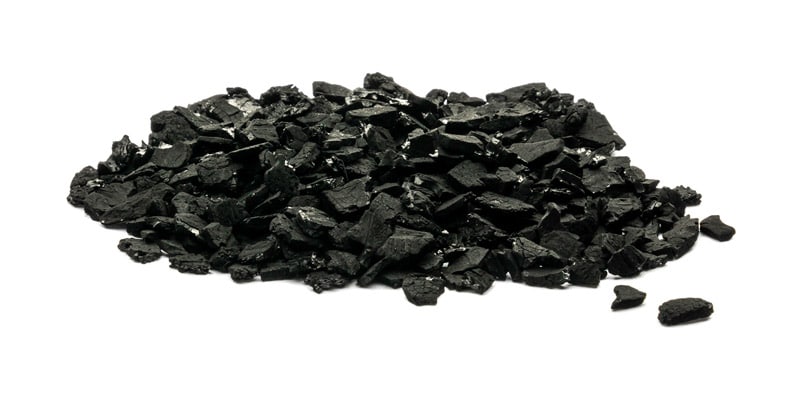 HS-AC
HS-AC
Palmitic Acid
Palmitic acid, or hexadecanoic acid in IUPAC nomenclature, is one of the most common saturated fatty acids found in animals and plants. Its molecular formula is CH3(CH2)14COOH. As its name indicates, it is a major component of the oil from palm trees (palm oil, palm kernel oil and coconut oil). The word palmitic is from the French “palmitique”, the pith of the palm tree. Palmitic acid was discovered by Edmond Frémy in 1840, in saponified palm oil. Butter, cheese, milk and meat also contain this fatty acid. Palmitate is a term for the salts or esters of palmitic acid. The palmitate anion is the observed form of palmitic acid at neutral pH.
Media Solution
Pantane
Media Solution
Paradichlorbenzine
a chemical used to control moths, molds and mildew, and also to deodorize restrooms and waste containers. At room temperature it is a colorless solid with a strong, pungent odor, usually associated with mothballs. Very high exposures can cause dizziness, headaches and liver problems. Exposure occurs via contaminated fish consumption, breathing air around mothballs or wherever p-DCB is used or manufactured. Infants can be exposed by drinking breast milk from mothers exposed to p-DCB.
Media Solution
Pentanone
Pentan-2-one or 2-pentanone or methyl propyl ketone is a colorless liquid ketone with an odor resembling that of acetone. Its formula is C5H10O. It is sometimes used in very small amounts as a flavoring food additive. Two other ketones, 3-pentanone and methyl isopropyl ketone are isomers of 2-pentanone. Pentanone (also known as diethyl ketone) is a simple, symmetrical dialkyl ketone. It is a colorless liquid ketone with an odor like that of acetone. It is soluble in about 25 parts water, but miscible with organic solvents. It is mainly used as a solvent in paint and a precursor to vitamin E. It is easily soluble in diethyl ether and partially soluble in acetone, methanol, and water. Two related and more important ketones are 2-pentanone and methyl isopropyl ketone.
Media Solution
Pentylene
Pentene refers to all the alkenes with chemical formula C5H10 containing a single double bond within its molecular structure. 1-Pentene (pent-1-ene) and 2-pentene (pent-2-ene) differ by the location of the double bond at the first or second carbon-carbon bond. 1-Pentene is an alpha-olefin. Most often 1-pentene is made as a byproduct of catalytic or thermal cracking of petroleum, or during production of ethylene and propylene via thermal cracking of hydrocarbon fractions. 1-Pentene is rarely isolated as a separate compound. Instead, it is most often blended into gasoline or, in a mixture with other hydrocarbons, alkylated with isobutane to make gasoline.
Media Solution
Pentyne
2-Pentyne, an organic compound, is an internal alkyne. It is an isomer of 1-pentyne, a terminal alkyne. 1-Pentyne, an organic compound, is a terminal alkyne. It is an isomer of 2-pentyne, an internal alkyne.
Media Solution
Perchloroethylene
Tetrachloroethylene, also known under its systematic name tetrachloroethene and many other names, is a chlorocarbon with the formula Cl2C=CCl2. It is a colourless liquid widely used for dry cleaning of fabrics, hence it is sometimes called “dry-cleaning fluid.” It has a sweet odor detectable by most people at a concentration of 1 part per million (1 ppm). Worldwide production was about 1 megatonne in 1985.
Media Solution
Perfume Odors
Media Solution
Phenol
Phenol, also known as carbolic acid, is an organic compound with the chemical formula C6H5OH. It is a white, crystalline solid at room temperature. It consists of a phenyl (-C6H5) group, bonded to a hydroxyl (-OH) group. It is produced on a large scale (about 7 billion kg/year) as a precursor to many materials and useful compounds. It is only mildly acidic but requires careful handling due to its toxicity and its propensity to cause severe burns.